
Feminist Interpretation of Genesis

Adam, Eve, and the Origins of Patriarchy
Traditional readings of the Genesis creation and paradise stories have often been used to support the subordination of women in social, religious, and legal contexts. In these interpretations, Eve is usually cast as a secondary creation and blamed for the expulsion from Eden. However, feminist biblical criticism and literary analysis have questioned these assumptions by focusing on the structure and language of the text itself. Some scholars, including those cited in the New Oxford Annotated Bible, argue that Genesis 1–3 can be read as presenting an egalitarian vision for humanity. The subjugation of women described in Genesis 3 is not presented as a divine command but as a result of human disobedience and the breakdown of mutuality. This shift is foundational for the later appearance of patriarchal systems in the biblical narrative.
The Egalitarian Blueprint: Creation in Genesis 1 and 2
Genesis begins with two creation accounts that reflect different theological perspectives on God and creation. Both have been closely examined by feminist scholars for their implications regarding equality between men and women.
The Priestly account in Genesis 1:1-2:3 presents God as a transcendent creator who brings the world into being through speech. The repeated phrase “Let there be” structures the narrative and establishes order. The text states, “So God created humankind in his image, in the image of God he created them; male and female he created them” (Genesis 1:27). The Hebrew word 'adam here refers to humanity as a whole, not just to a male individual. Both male and female are created simultaneously and both receive the image of God, as well as the shared responsibility to rule the earth. Robert Alter notes that this passage avoids any suggestion of female subordination or of an originally androgynous human.
The Yahwistic account in Genesis 2:4-3:24 offers a different portrayal of God. Here, God is described in human-like terms, forming the human from dust, planting a garden, and walking in the garden. This narrative emphasizes God’s direct involvement with creation. When God sees that “it is not good that the man should be alone” (Genesis 2:18), God creates a partner for the human. Robert Alter points out that this account highlights relationship and responsiveness, rather than the distant command of the Priestly narrative.
The New Oxford Annotated Bible outlines how these two sources reflect different world views and authorship contexts. The Priestly account, with its emphasis on cosmic order and divine transcendence, likely emerged from priestly circles concerned with liturgical structure and theological precision. The Yahwistic account, with its vivid storytelling and intimate portrayal of God, reflects a different literary and theological tradition. Scholarly consensus holds that these accounts were written in different historical periods and were combined during the postexilic period, which explains their contrasting perspectives on the nature of God and the process of creation.
Despite their differences, both creation accounts provide a basis for understanding human relationships as fundamentally equal. The Priestly account does this by describing the simultaneous creation of male and female in God’s image, with both given dominion. The Yahwistic account presents the woman as a partner created to address the human’s isolation. The Hebrew phrase 'ezer k’negdo, usually translated as “helper,” has been reconsidered by scholars. In the Hebrew Bible, 'ezer often refers to active help or intervention, not subordination. RobertAlter translates this as “sustainer beside him,” which stresses equality rather than hierarchy. The creation of the woman from the man’s rib is best read as a metaphor for partnership.
The presence of a partnership model in both creation accounts supports the argument that Genesis has an egalitarian foundation. Whether through the shared divine image or the narrative of companionship, both sources present man and woman as having equal dignity. Feminist scholars and the New Oxford Annotated Bible note that, despite differences in style and theology, these accounts point toward mutuality rather than hierarchy.
The Myth of Lilith: From Demoness to Feminist Icon
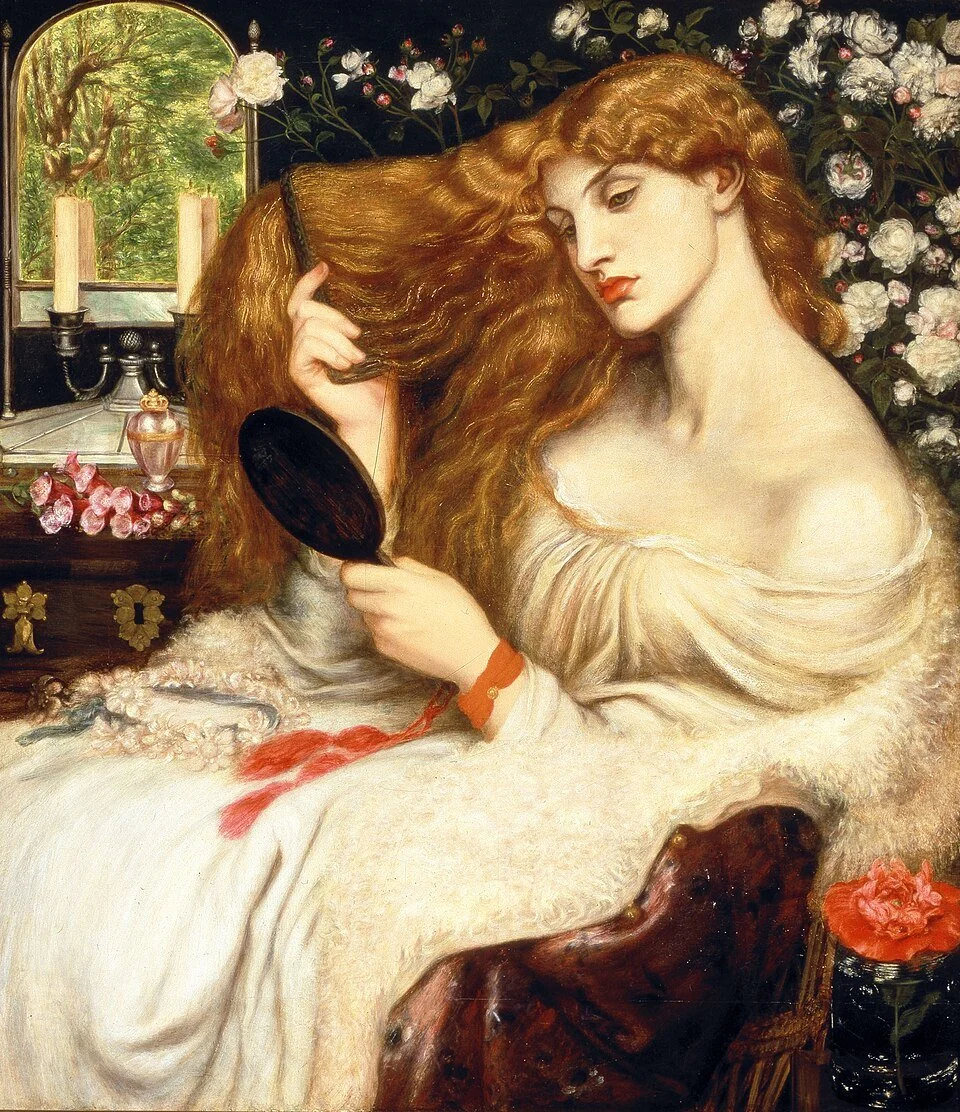
Dante Gabriel Rossetti
Year1866–1868, 1872–73
The discrepancy between the simultaneous creation of male and female in Genesis 1 and the sequential creation in Genesis 2 gave rise to one of the most fascinating figures in feminist midrash: Lilith. To reconcile the two texts, ancient Jewish folklore, most notably the 9th-century Alphabet of Ben Sira, posited that Lilith was Adam’s first wife, created from the same earth at the exact same time. Lilith refused subordination; when Adam demanded dominance, she invoked the sacred name of God and departed the Garden of Eden.
Patriarchal traditions have often portrayed Lilith as a vengeful figure, associated with demonic qualities and the endangerment of infants. In some classical art, such as Michelangelo’s Fall and Expulsion in the Sistine Chapel, the serpent is depicted with a woman’s torso, which has been interpreted by some as a representation of Lilith. In recent decades, feminist critics have reinterpreted Lilith’s narrative. For example, Judith Plaskow’s 1972 work ‘The Coming of Lilith’ recasts Lilith as a figure of autonomy and resistance to patriarchal subordination, emphasizing solidarity with Eve. In contemporary contexts, Lilith has become a symbol of female independence, inspiring feminist publications and movements.
The Fall: Intellectual Autonomy and the Disintegration of Mutuality

Domenichino’s painting The Rebuke of Adam and Eve (1626)
Genesis 3 introduces the serpent, described as the most cunning of the animals. The serpent offers the woman the possibility of knowledge, specifically the ability to discern good and evil apart from God’s command. Both Eve and Adam are shown as seeking this knowledge. Traditional commentaries often blame Eve as the one who led Adam into disobedience. A closer literary reading, however, shows that both are responsible. Eve speaks with the serpent and adds to God’s command by saying, “neither shall you touch it,” which opens the way for transgression. Adam, who is present, also eats the fruit without protest. Robert Alter notes that the narrative does not excuse either character, but instead presents a realistic account of shared failure.
The immediate result of their disobedience is a breakdown in human solidarity. When God questions Adam, he shifts responsibility to the woman and, by extension, to God. The partnership described in Genesis 2 is broken, and the narrative now emphasizes isolation and shame.
The "Curse” as Descriptive Patriarchy, Not Divine Prescription

Adam and Eve in the state of innocent love
Stipple engraving
The most decisive moment for feminist interpretation occurs in the divine judgment in Genesis 3:16. God tells the woman: “I will greatly increase your pangs in childbearing; in pain you shall bring forth children, yet your desire shall be for your husband, and he shall rule over you."
This verse has often been read as a divine command that establishes women’s subordination to men. Modern feminist criticism, however, treats these words as an explanation for the realities of the ancient world, not as a prescription for how things should be. The man’s struggle with the earth and the woman’s pain and subjugation are seen as consequences of human disobedience, not as God’s ideal. The New Oxford Annotated Bible supports this etiological reading.
Genesis 2 describes the man and woman as becoming “one flesh” (2:24), which represents mutuality and partnership. This unity is presented as the ideal for human relationships. After their disobedience, this unity is lost. The woman experiences pain in childbirth, and the man’s rule introduces hierarchy and separation. The curse does not create a new order but describes the breakdown of the original partnership.
The punishment in Genesis 3 does not reveal God’s intention for gender relations, but instead shows the tragic breakdown of human relationships after disobedience. The woman’s subjugation is a symptom of lost unity, showing how the Fall disrupts the original partnership. Where there was mutuality, there is now domination and struggle. The text presents male rule as a corruption of creation, not its fulfillment.
Feminist scholars argue that Genesis records patriarchy as a result of human failure, not as God’s design. The text remembers both the original equality and the pain of its loss. It invites readers to see patriarchal dominance as a consequence of disobedience, not as a divine command. This reading changes how we approach the rest of Genesis, seeing the struggles of women as evidence of a broken world rather than proof of their inferiority.
Reading Against the Grain: Women Navigating a Fallen World
Reading patriarchal systems as consequences of the Fall, not as divine mandates, shapes how we interpret the rest of Genesis. This approach highlights how the narrative exposes the failures of the patriarchs and also shows the agency and resilience of women who are marginalized. The text records how women navigate and sometimes resist the constraints of a fallen world.

A depiction of Hagar and her son Ishmael in the desert (1819) by François-Joseph Navez
Hagar’s encounter with the divine in Genesis 16 is an example of this pattern. After Sarai mistreats her, Hagar flees and meets an angel in the wilderness. She is the first person in the Bible to name God, calling the divine presence “El-roi,” or “God Who sees me.” James Kugel observes that biblical stories often show people who do not recognize God or angels at first, but Hagar’s recognition and naming of God is a moment of spiritual agency. Her awareness that God sees her suffering contrasts with her invisibility in the household that exploited her.

Judah and Tamar, school of Rembrandt
Tamar’s story in Genesis 38 shows how patriarchal laws limited women’s rights and security. After her husband dies, Tamar is denied levirate marriage and faces poverty. She disguises herself as a prostitute to secure her future. When Judah learns of her pregnancy and wants to punish her, he admits, “She is more in the right than I.” This does not excuse Judah, but highlights the complexity of justice and the agency of women within a patriarchal system. The narrative critiques the system that forced Tamar to act and recognizes her determination.
Conclusion
A feminist and literary reading of the Adam and Eve story challenges traditional interpretations that have justified the subjugation of women. Careful analysis of Genesis 1, 2, and 3 shows a theology of equal worth and shared responsibility for men and women. The Priestly account describes simultaneous creation in God’s image, while the Yahwistic account presents the woman as a partner who addresses human isolation. Both accounts point toward mutuality, not hierarchy.The story of the Fall does not establish female inferiority. Instead, it shows human moral autonomy and the breakdown of relationships. Both Adam and Eve speak with the serpent and disobey. Their shared failure ends the partnership described in Genesis 2, leading to blame, isolation, and shame. The judgment in Genesis 3:16 presents patriarchal dominance as a result of the fallen condition, not as God’s ideal. The New Oxford Annotated Bible supports this etiological reading.
This way of reading Genesis helps us see how female characters navigate the patriarchal systems that limit them. Eve, Lilith, Hagar, and Tamar all show agency and resilience within these structures. The text itself critiques the systems that restrict their freedom. Careful reading of these stories allows us to question traditional interpretations and supports the view that all people are created with dignity and equality. Genesis remembers both the original equality and the pain of its loss, inviting readers to see patriarchal dominance as a departure from God’s design.
References
Alter, R. (1996). Genesis: Translation and commentary. W. W. Norton & Company.
Brichto, H. C. (1998). The names of God: Poetic readings in biblical beginnings. Oxford
University Press. (Reviewed by Marcus, D., 2002, AJS Review, 26(2), 349-350).
Coogan, M. D., Brettler, M. Z., Newsom, C. A., & Perkins, P. (Eds.). (2010). The New
Oxford
Annotated Bible (New Revised Standard Version). Oxford University Press.
Gunn, D. M., & Fewell, D. N. (1993). Narrative art in the Hebrew Bible. Oxford University
Press.
Hammond, M. K. (2004). Casting light on Lilith: A biblical approach. Inklings Forever:
Published Colloquium Proceedings 1997-2016, 4(7).
https://pillars.taylor.edu/inklings_forever/vol4/iss1/7.
Khadka, S. (n.d.). Lilith through the times: Demoness to feminist icon. Retrieved from
https://skhadka.sites.gettysburg.edu/Lilith/.
Kovacs, M. G. (Trans.). (n.d.). The Epic of Gilgamesh.
Kugel, J. (2007, March 31). Interview with James Kugel. St. Jerome’s University,
Waterloo.
Longman, T., III. (1987). Literary approaches to biblical interpretation (Foundations of
Contemporary Interpretation, V ol. 3). Zondervan Publishing House.
Mathews, K. A. (2005). Genesis 11:27-50:26 (New American Commentary, V ol. 1B).
Broadman and Holman.
Sarna, N. M. (1966). Understanding Genesis: The heritage of biblical Israel. Jewish
Theological
Seminary of America / Varda Books.Sternberg, M. (1985). The poetics of biblical
narrative: Ideological literature and the drama of reading. Indiana University Press.
Von Rad, G. (1972). Genesis: A commentary (J. H. Marks, Trans.; Rev. ed.). The
Westminster Press.
